Thinking about building on the Lake Huron shoreline in Presque Isle? The view may be easy to fall in love with, but a waterfront parcel can come with questions that are not obvious from the road. If you want to plan wisely, protect your investment, and avoid costly surprises, it helps to understand how local zoning, shoreline rules, and site conditions work together. Let’s dive in.
Start With the Parcel, Not the Floor Plan
When you picture a custom lake home, it is natural to start with windows, views, and layout. In Presque Isle Township, the smarter first step is making sure the parcel can support the home, wastewater system, driveway, and shoreline setup you have in mind.
The township’s planning materials point to several common shoreline issues, including changing lake levels, erosion, wetlands, groundwater conditions, and the need for shoreline buffers. That means a lot that looks ideal online may still need careful review before you move forward with design.
Know Who Regulates What
In Presque Isle Township, zoning is handled locally, while Presque Isle County Building & Zoning administers state construction codes and issues building permits. County guidance states that zoning approval must come before a building permit, and permits are required before work begins.
This matters because a custom waterfront project is usually reviewed as a full site plan, not just a house on a vacant lot. Depending on the parcel and your plans, you may also need to look at site plan review, a special use permit, a variance application, demolition materials for an older structure, or other local approvals.
The township also maintains separate ordinances for docks, greenbelts, dark sky lighting, land division, and septic and well inspection at property transfer. In other words, waterfront design in Presque Isle is regulated as a package.
Evaluate Buildability Before You Commit
Before you buy a shoreline parcel, it is worth confirming whether it is truly buildable for your intended use. New construction permit instructions from the county require drawings or blueprints for plan review, proof of ownership, and separate permits for electrical, plumbing, mechanical, zoning, and soil erosion.
For a new dwelling on a vacant parcel, the county also requires a house number, and driveway permits come from the Presque Isle County Road Commission. That is one reason buyers often benefit from bringing in a surveyor and builder early in the process.
Check Lot Size and Setbacks
A waterfront lot needs more than a pretty shoreline. You need to understand exact lot size, frontage, and the realistic buildable envelope once setbacks and other site limits are applied.
Township ordinance materials show district-specific waterfront standards. Examples in the ordinance include Lake Huron front setbacks of 60 feet in several districts, while side and rear setbacks vary by district. Some waterfront lots are also subject to site plan review and greenbelt-related requirements.
Check for Nonconforming Conditions
Many shoreline parcels are older, narrow, or irregularly shaped. If a lot is nonconforming or your plans do not fit standard dimensional rules, the Zoning Board of Appeals may need to be involved.
This can be especially important if you are considering a legacy lot, an unusual corner, or a rebuild on a site that was developed long ago. A quick yes or no answer is rarely enough with waterfront property.
Check Tear-Down Rules Early
If the property has an older home or cottage that you plan to remove, check demolition requirements before assuming you can rebuild right away. The township includes demolition permit materials among its zoning forms.
That early review can help you understand whether an existing structure changes your timeline, site layout, or approval path.
Check Flood and Shoreline Exposure
Lake Huron water levels rise and fall in cyclical high- and low-water periods, and the township notes that high water can lead to flooding and shoreline erosion. That makes flood hazard verification an important part of due diligence for any shoreline address.
It is also wise to look beyond the map and think about real shoreline exposure. A parcel’s bank condition, nearshore area, and erosion history can shape how and where you build.
Check Driveway Access
A parcel can seem buildable until access becomes the issue. Because driveway permits come from the Road Commission, road frontage and driveway feasibility should be part of your review from the start.
That is particularly true if the lot has limited frontage, unusual topography, or an existing access point that may need upgrading.
Plan Around Shoreline Conditions
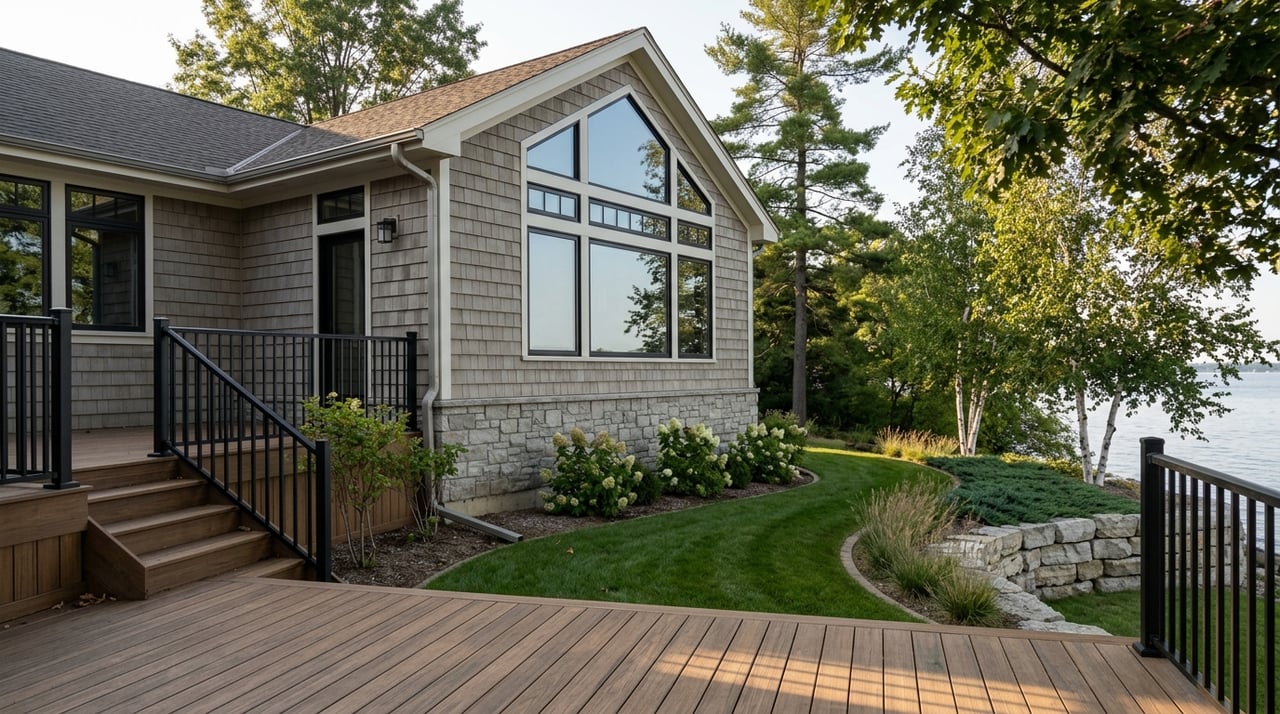
On the Lake Huron shoreline, the edge of the property is often the most sensitive part of the site. Presque Isle Township’s master plan notes that developed lakeshore properties with manicured lawns do not provide strong water-quality buffers or wildlife habitat.
The township also notes that when greenbelts are absent, more phosphorus and nitrogen can reach the lake. For a custom home project, that creates a practical reason to preserve a more natural shoreline buffer rather than treat the lake edge like a typical suburban backyard.
Understand EGLE’s Role
Michigan EGLE regulates work on Great Lakes bottomlands and along the ordinary high-water mark. Permits can be required for filling, dredging, placing a structure on bottomland, shoreline management work, wetlands impacts, and projects in designated Critical Dune Areas or High-Risk Erosion Areas.
EGLE also notes that many shoreline projects may require both state and federal review. If you are unsure whether a permit may be needed, a pre-application meeting can help clarify the path before final design decisions are made.
Think Carefully About Erosion Control
If a lot shows signs of erosion, do not assume a hard seawall is the only answer. EGLE recommends natural shoreline treatments and bioengineering approaches rather than relying only on hard armoring.
Its guidance highlights shoreline woody structure and soil lifts as best management practices that can help stabilize banks while supporting habitat and water quality. For many buyers, this is a helpful reminder that shoreline resilience and appearance can work together.
Plan Docks Early in the Design
Dock planning is easy to leave until later, but it should be part of your early site work. Presque Isle Township’s dock rules state that a developed lakefront property is automatically allowed one dock, while additional docks require a permit from the zoning administrator.
The rules also require docks to be set back from side lot lines at the ordinary high-water mark so that boats and attachments do not cross property lines. Township materials also note that the DNR determines navigational hazards.
If your future home design depends on boating access, beach use, or a particular shoreline layout, it helps to coordinate those ideas with the dock rules before plans are finalized.
Design for Views and Comfort
A Lake Huron home should do more than frame the water. It should also feel comfortable in every season.
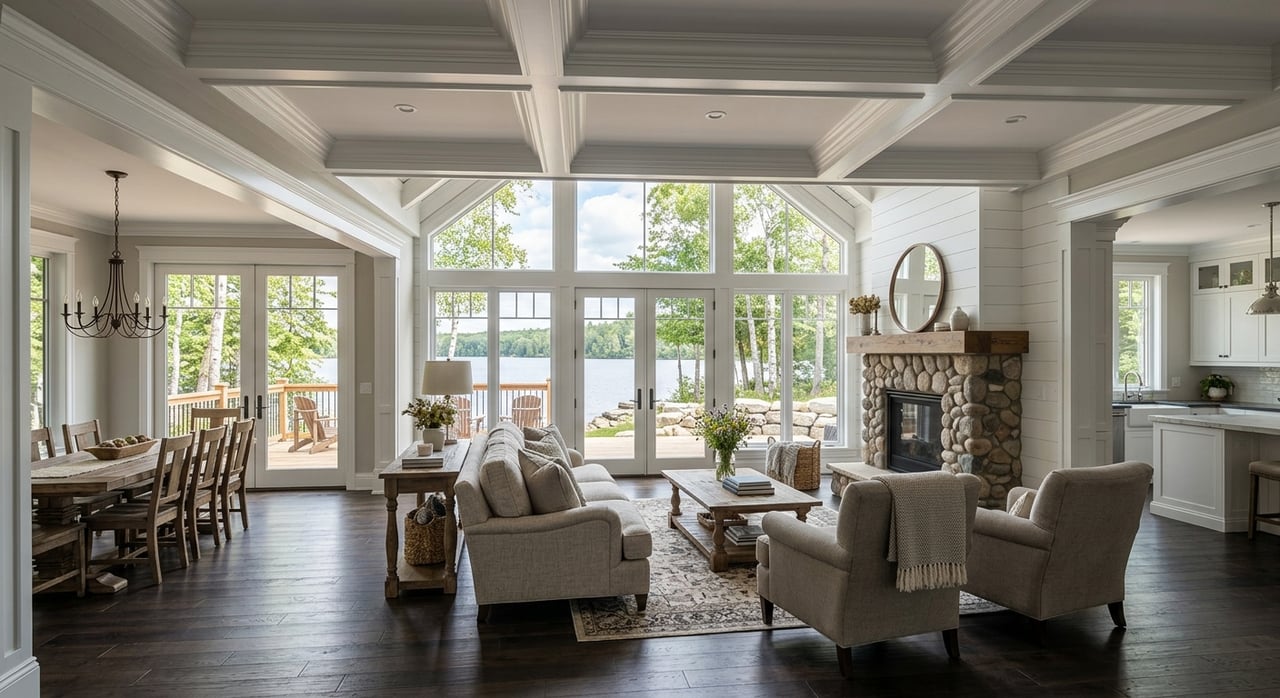
General guidance from the U.S. Department of Energy shows that south-facing windows work best when they are within 30 degrees of true south and are not shaded during the heating season from roughly 9 a.m. to 3 p.m. The same guidance recommends overhangs, awnings, shutters, and landscaping to reduce overheating in warmer months.
DOE daylighting guidance also notes that east- and west-facing glass can create glare and unwanted summer heat, while north-facing windows provide more even light with little solar gain. For a shoreline property, that means the best design often balances lake views, daylight, and energy performance.
A strong approach is to place primary living areas where they can enjoy the view, then fine-tune comfort with high-performance glazing, thoughtful window sizing, roof overhangs, and exterior shading. On a custom waterfront build, orientation should be part of the whole-house design from day one.
Keep These Local Contacts in Mind
As you move from dreaming to planning, it helps to know which offices may be part of the process.
- Presque Isle Township Zoning Administrator: Steve Lang, 989.595.2752 ext. 3, [email protected]
- Presque Isle County Building & Zoning Department: Handles building permits, plan review, inspections, and county construction-related codes
- District Health Department No. 4, Rogers City office: Handles permits and inspections for private wells and onsite sewage disposal systems
- Presque Isle County Road Commission: Needed for driveway permits on new or upgraded drives
- EGLE Water Resources Division: A key contact for Great Lakes shoreline, wetlands, bottomlands, floodplain, and shoreline-protection questions
A Simple Planning Sequence to Follow
If you want to reduce surprises, it helps to move in the same order local rules are organized. Start by verifying the parcel, its zoning, and its jurisdiction.
Next, test septic, well, and driveway feasibility. Then confirm shoreline setbacks and permit needs before finalizing the design, and only after that shape the house around views, light, and year-round performance.
That sequence can save time, protect your budget, and help you avoid building a vision around a site constraint that should have been caught first.
Planning a custom home on the Lake Huron shoreline is about more than finding a beautiful lot. It is about matching your goals to the realities of the site, the shoreline, and the local approval process. If you want experienced, local guidance as you evaluate land or compare waterfront opportunities in Northern Michigan, connect with Coldwell Banker Fairbairn Realty.
FAQs
What should you check before buying a Lake Huron lot in Presque Isle?
- Confirm zoning, lot size, frontage, setbacks, driveway access, flood hazard, and whether the parcel can support a home, septic system, well, and shoreline plan.
What approvals are needed for a custom home in Presque Isle Township?
- Zoning approval must come before a building permit, and your project may also involve building, electrical, plumbing, mechanical, soil erosion, driveway, septic, well, dock, or shoreline-related permits depending on the site.
What does EGLE review for Great Lakes shoreline property in Michigan?
- EGLE may review projects involving bottomlands, the ordinary high-water mark, wetlands, shoreline protection, filling, dredging, and certain erosion or dune-related conditions.
What are the dock rules for lakefront property in Presque Isle Township?
- Township rules state that a developed lakefront property is automatically allowed one dock, while additional docks require a permit, and docks must be set back from side lot lines at the ordinary high-water mark.
Why does greenbelt planning matter for a Lake Huron custom home?
- The township’s planning materials note that natural shoreline buffers can help limit runoff to the lake and support shoreline function better than heavily manicured lawn areas.